
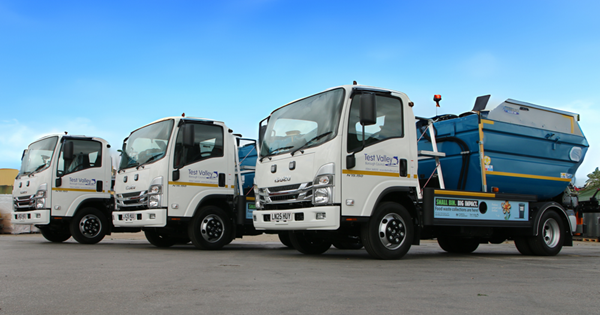
One year of food waste recycling helps power a greener Test Valley
Residents across Test Valley have recycled around 4,000 tonnes of food waste since the council launched its weekly food waste collection service one year ago.
Over the last 12 months, households have used the service to recycle things like fruit and vegetable peelings to tea bags, coffee grounds, meat, fish and dairy products.
The weekly service has helped residents manage their household waste more effectively by removing food waste from their rubbish bins. Since the service launched in October 2025, Test Valley’s household waste has decreased by 18%.
After collection, specialist facilities process the food waste through anaerobic digestion. This process breaks down food waste to produce biogas, which generates renewable energy. The process also creates a nutrient-rich fertiliser that farmers can use on agricultural land. Recycling food waste helps turn everyday leftovers into valuable resources rather than throwing them away.
Councillor David Drew, portfolio holder for recycling, said: "We're incredibly proud of how residents have embraced food waste recycling over the past year. Collectively, they've recycled on average 345 tonnes of food waste each month that would otherwise have gone into rubbish bins. Every food waste caddy presented for collection helps us reduce waste, generate renewable energy and make better use of resources.
"The success of the service shows that small actions can make a big difference. I'd like to thank everyone who has taken part and encourage anyone who isn't yet using their food waste caddy to give it a try."
Residents can use their food waste caddies for a wide range of items, including fruit and vegetables, meat and fish, dairy products, bread, rice, pasta, tea bags and coffee grounds. They should remove any packaging before putting food waste into the caddy.
To get the most from the service, residents can:
- keep their kitchen caddy in a convenient place to collect food scraps
- line the caddy with compostable liners, plastic bags, newspaper or kitchen roll if they wish
- lock the lid on the kerbside caddy to keep pests out
- put their kerbside caddy out for collection every week, even if it is not completely full
With Halloween approaching, the council is also reminding residents that they can recycle their pumpkins through the food waste collection service once celebrations have finished.
If a pumpkin's still firm, remove any decorations and either cut it up and place it in the kerbside caddy, or leave it whole next to the caddy, ready for collection. Once a pumpkin has become soft and mushy, put it straight into the kerbside caddy.
For more information about the food waste collection service, including what can and cannot go into a food waste caddy, visit www.testvalley.gov.uk/foodwaste.